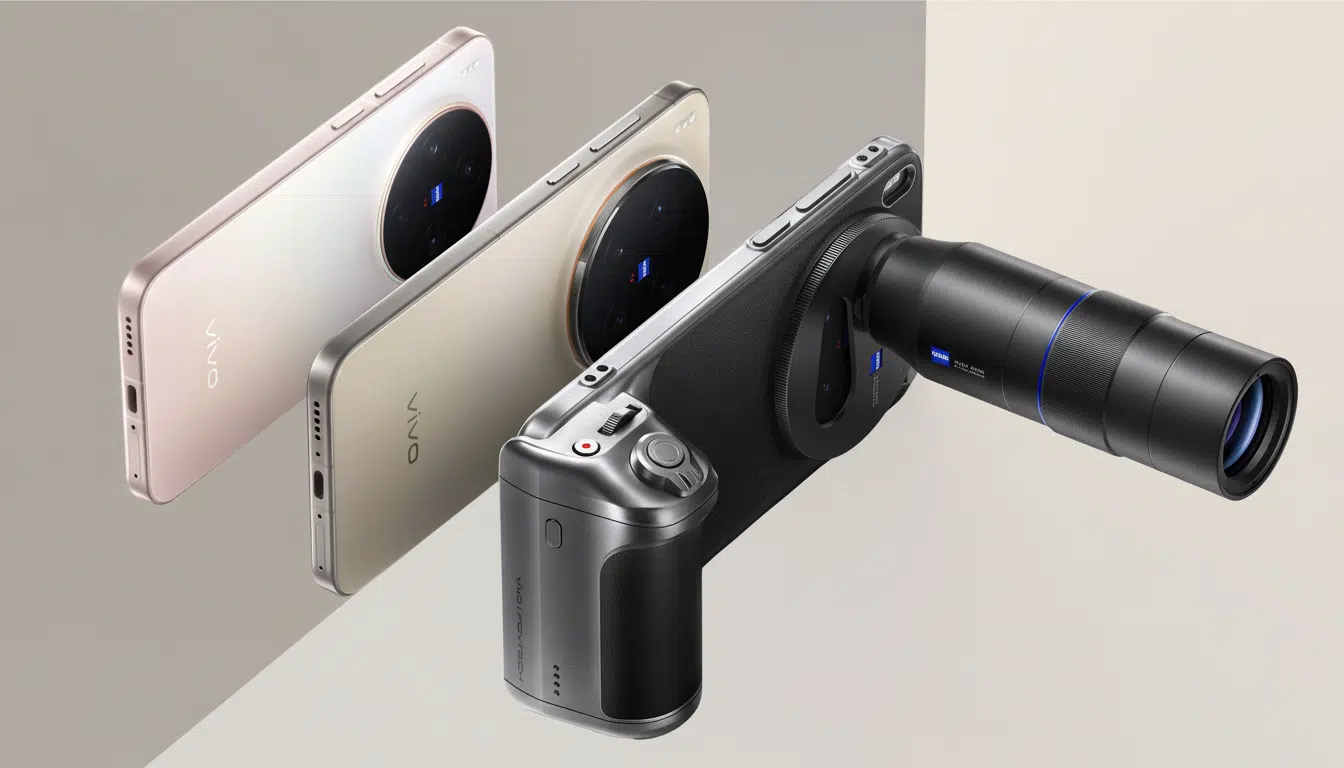
Vivo’s upcoming flagship camera phone, the X300 Ultra, could mark a breakthrough in mobile photography if recent leaks prove true: it is reportedly set to feature dual 200MP cameras, with a primary lens at a 35mm or 50mm equivalent focal length. If confirmed, this successor to one of the year’s most acclaimed camera phones may push smartphone imaging into territory typically reserved for dedicated cameras.
Dual 200MP Cameras and the 35mm Advantage
The headline rumor is a dual 200MP camera setup—a high-resolution main lens paired with a 200MP periscope zoom. The main camera’s 35mm equivalent lens is a rarity in smartphones, which usually favor wider 23–24mm lenses. By moving closer to the 35mm standard, the X300 Ultra could deliver less distortion, better subject separation, and more natural-looking portraits and street scenes—without the exaggerated wideness found in typical phone shots.
This configuration isn’t just about framing. High pixel counts like 200MP allow for sophisticated pixel binning, where the sensor can combine 16 pixels into one, outputting sharp 12.5MP images with larger “effective” pixels. This leads to improved low-light performance and mid-tone detail, rivalling monochrome sensors—without image mosaicing or crude binning artifacts. The increased resolution also permits clean cropping in-sensor: users can zoom to 50mm or 70mm-like views without resorting to digital zoom. While rivals such as Samsung Ultra models employ 200MP sensors at wider angles, Vivo’s embrace of 35mm may reset creative standards and minimize lens-swapping for portrait photography.
Enhancements and Reliable Features
Not everything is set to change; the ultrawide camera is expected to maintain a robust 50MP sensor, reportedly measuring a sizable 1/1.28-inch. Such a large sensor could reduce edge noise and enhance low-light performance, highlighting Vivo’s focus on focal range and overall quality—not just headline specs.
Rumors also point to the use of wide apertures and an updated Zeiss T* lens coating. Brighter apertures paired with improved coatings will reduce lens flare, preserve contrast near point light sources, and maintain color accuracy. Past Ultra models have suffered from flare and color distortion during nighttime or neon-lit photography, so these tweaks could translate to reliably clearer images in challenging conditions.
Performance Driven By State-of-the-Art Silicon
Handling the demands of two 200MP cameras requires powerful hardware. The X300 Ultra is rumored to utilize Qualcomm’s next-generation flagship chipset, while non-Ultra models may opt for the latest MediaTek Dimensity platform. With modern triple ISPs and advanced neural processors, the device should be capable of real-time AI advancements, extensive memory bandwidth via LPDDR5X, and high-res image processing. Features like multi-frame HDR, motion de-ghosting, and sophisticated sharpening suppression are likely to maximize the potential of these massive sensors.
This aligns with industry trends: independent labs such as DXOMARK have shown that leading camera phones leverage large sensors, computational photography, and superior lens coatings. Vivo’s Ultra series aims to embody this approach, and the move to a 35mm 200MP primary lens could transform the focus from raw specs to thoughtfully rendered images.
Accessories and Global Availability
There is speculation about renewed interest in telephoto accessories, following the introduction of detachable lens modules in premium models from other major Chinese brands. Vivo’s history with optical kits suggests the X300 Ultra could also support add-on telephoto options, extending its reach past the limits of a slender periscope lens.
Availability remains one of the biggest unknowns. Previous Ultra models have sometimes been restricted to the Chinese market. If exclusivity persists, global fans may have to resort to imports at a premium. Broader distribution would enliven the flagship camera category, likely pressuring competitors to respond with genuine hardware improvements rather than incremental software updates.
The 35mm 200MP Impact on Everyday Photography
Most smartphones default to wide, dramatic perspectives. The X300 Ultra’s 35mm main lens flips this convention, offering a flattering and cleaner look that’s ideal for faces and urban scenes. Joined with today’s ultra-high-res sensors and advanced processing, it could bring a more photographic aesthetic to casual phone shots: sharper portraits, nuanced crops, and balanced exposures—without the need to switch modes or compromise in mixed lighting.
Ultimately, real-world results will determine the X300 Ultra’s impact. But if these leaks prove accurate, Vivo’s next flagship represents a thoughtful reimagining of the smartphone camera—one where sensor muscle and lens choices work in harmony, elevating photo quality for professionals and everyday users alike.