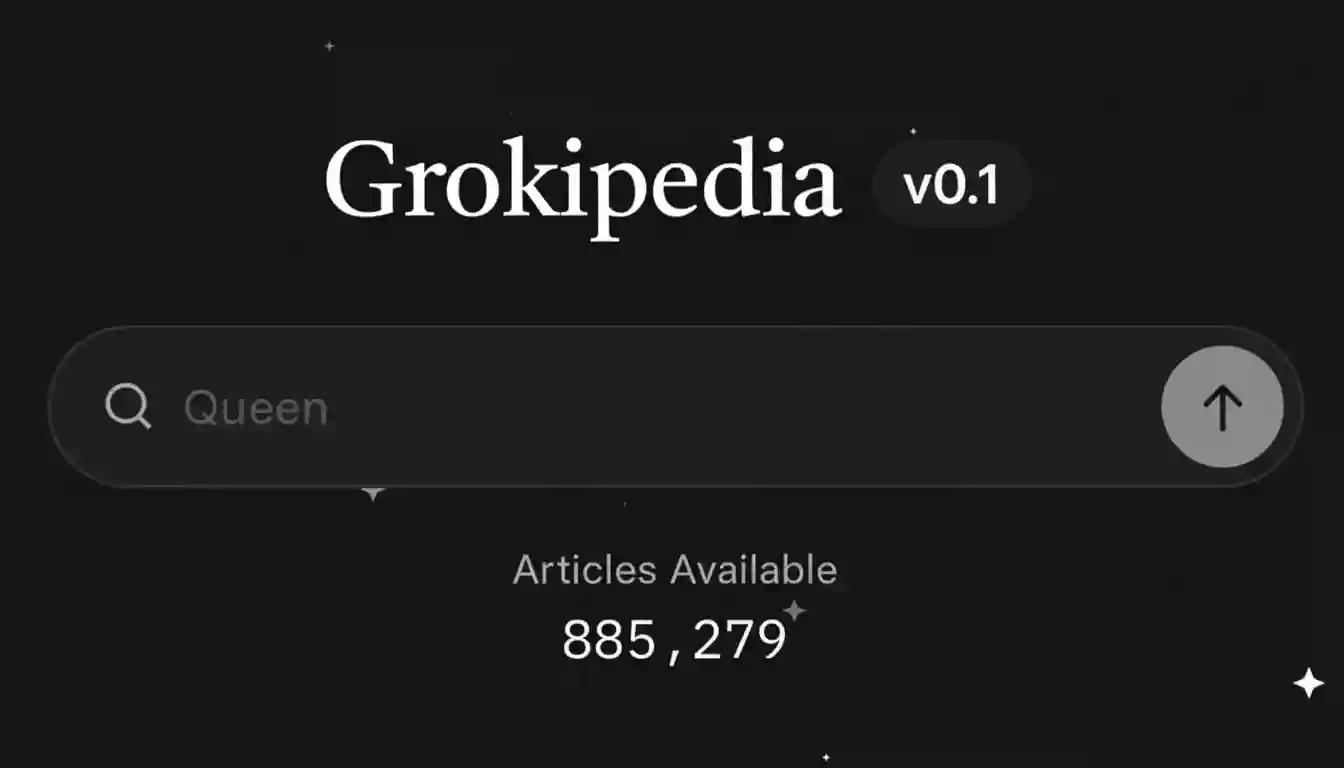
Grokipedia, a new online encyclopedia launched as a competitor to Wikipedia, has been criticized for repeatedly citing white supremacist and low-credibility sources, according to a recent analysis by Cornell Tech researchers. The study, which examined over 880,000 entries, highlights recurring references to extremist sites including Stormfront, Infowars, and VDARE.
Patterns of Sourcing Problems
Researchers found multiple Grokipedia articles linking to Stormfront, regarded as the internet’s oldest neo-Nazi forum, alongside dozens of citations to other controversial sources like Infowars and VDARE—both labeled by the Southern Poverty Law Center as white nationalist platforms. Wikipedia articles on similar topics rely more on mainstream newsrooms and peer-reviewed journals, while Grokipedia typically cites twice as many sources, a significant proportion of which come from domains lacking credibility or pushing extremist viewpoints.
Bias in Political and Controversial Topics
The analysis notes that on Grokipedia, articles covering politicians and controversial issues deviate more from their Wikipedia counterparts than less political entries. In particular, entries tied to modern politics or culture-war debates are more likely to use fringe or dubious sources. Researchers also observed that Grokipedia focuses significant rewriting efforts on Wikipedia’s highest-quality articles about politics, society, and history, raising concerns since those areas receive the most traffic and affect search rankings.
Editorial Transparency and Process
Unlike Wikipedia’s open editing model and visible community oversight, Grokipedia’s editorial system is largely opaque. Articles are generated or edited by Grok, the site’s AI chatbot, with suggested corrections funneled through a form—but lacking transparent handling and public audit trails. The absence of robust, community-driven safeguards for vetting sources and resolving disputes further amplifies the risks, according to the researchers.
Risks of Source Credibility
Citations from sites like Stormfront, Infowars, and VDARE are flagged by media literacy groups for spreading propaganda and misinformation. Wikipedia’s policies strictly discourage such sources for biographies and controversial claims to prevent “citation laundering”—the sneaky legitimization of fringe ideas via repeated cross-linking. When low-credibility sources appear in otherwise well-cited entries, they risk normalizing false or extremist narratives for unsuspecting readers.
Ongoing Debate and Recommendations
The Cornell Tech study is still a preprint and awaits peer review, but its large-scale, domain-level analysis signals a need for greater transparency from Grokipedia. Experts suggest that readers approach Grokipedia’s political and historical entries with caution, cross-checking with mainstream sources and remaining alert to questions around source reliability and editorial practices.