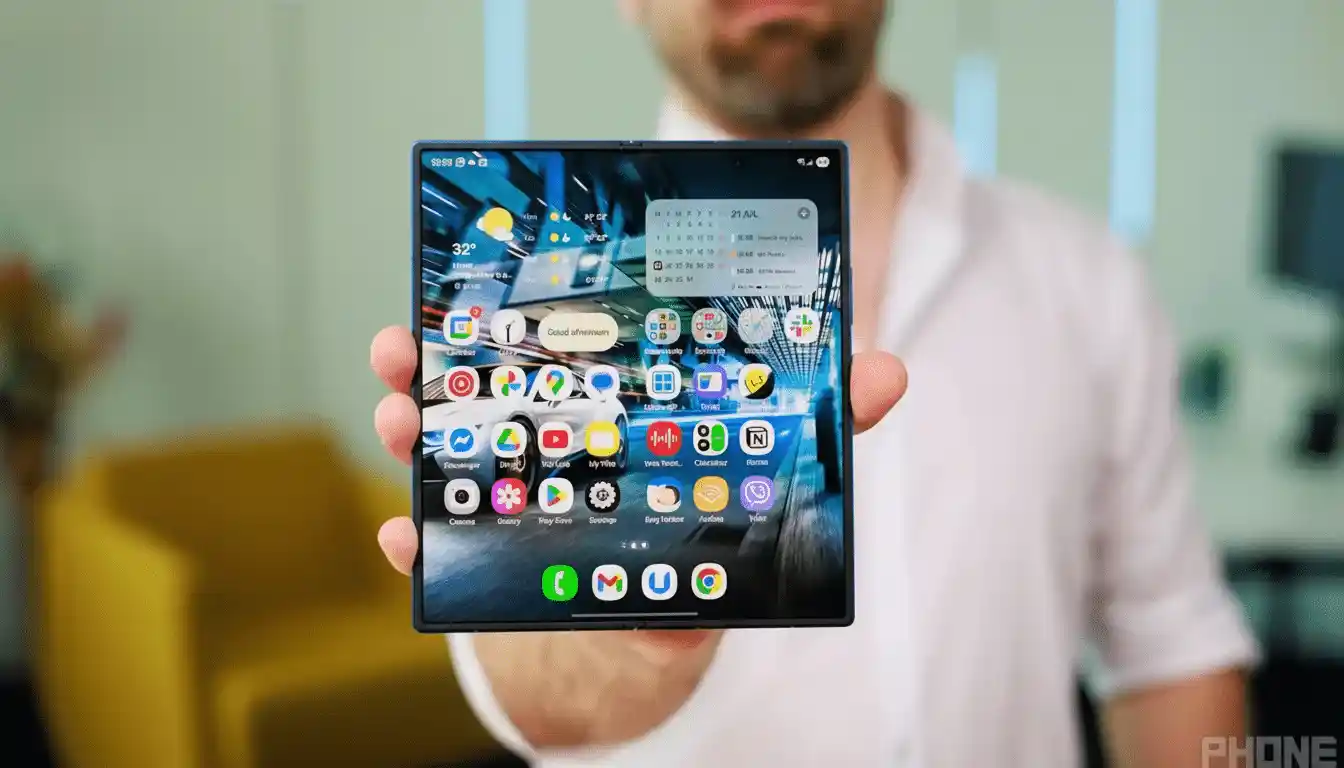
A newly discovered Samsung device listed as SM-F971U in the GSMA device database has reignited strong rumors about Samsung’s next foldable phone strategy. Unlike earlier speculation suggesting this device might be a budget Galaxy Z Flip 8 FE, the model number and codename “H8” link it to Samsung’s flagship Galaxy Fold series. This opens up the possibility of a new variation of Samsung’s large, book-style foldable phone rather than another flip-style device, signaling a potential return to a wider screen Fold with innovative design changes.
What the GSMA Listing Reveals
The SM-F971U, spotted by industry watchers and registered under the U.S. market suffix “U,” indicates forthcoming availability in America. Samsung’s foldable model numbering system typically assigns SM-F7xx to Flip phones and SM-F9xx to Fold phones, placing SM-F971U clearly in the Fold category. The codename “H8” further suggests this device belongs to a new branch of development within the Fold lineage, distinct from the existing Galaxy Z Fold 8 flagship, which carries the SM-F976 model number. This strongly supports the notion of a new wide Fold version in 2026 that may complement Samsung’s existing foldable lineup.
Innovative Design Directions for 2026
According to leaked information and South Korean reports, the new Fold model is expected to adopt a wider design approach to address user feedback on previous Fold models. The outer cover screen might feature an 18:9 aspect ratio — making it look more like a conventional smartphone when closed — while the internal foldable display is rumored to be nearly square, with an 18:18 layout or 1:1 ratio. This squarer inside screen would improve usability by offering more balanced split-screen multitasking, better framing for social media apps, and improved content creation tools without the typical tall and narrow constraints.
Advantages and Challenges of the Wider Fold
The wider Fold design promises an enhanced user experience by solving the cramped keyboard layouts and awkward app presentations seen on prior models. A larger, squarer internal screen could redefine mobile productivity, media consumption, and multitasking similar to tablet use but in a pocketable form factor. However, this shift brings engineering challenges such as hinge durability, pocketability, battery packaging, and ultra-thin glass reinforcement. Thankfully, advancements in hinge components, stronger ultra-thin glass (UTG), and brighter OLED panels are enabling Samsung to pursue this larger Fold without significantly increasing device thickness.
Market Dynamics and Release Expectations
Samsung’s Wide Fold appears timed to preempt Apple’s anticipated foldable iPhone, which is rumored to favor a wider form factor as well. This reflects Samsung’s historical strategy of pioneering foldable innovations before competitors. The foldable phone market is predicted to grow rapidly through the mid-2020s, with Samsung retaining its leadership despite intense competition from Chinese brands like Huawei and Honor. Launches in fall 2026 are expected, and industry watchers are monitoring certification filings, Bluetooth SIG, FCC documentation, and Samsung test servers for confirmation. If Samsung executes well on ergonomics and usability, the Wide Fold could become the most consumer-friendly foldable phone yet, merging phone-like convenience with expansive screen real estate inside.