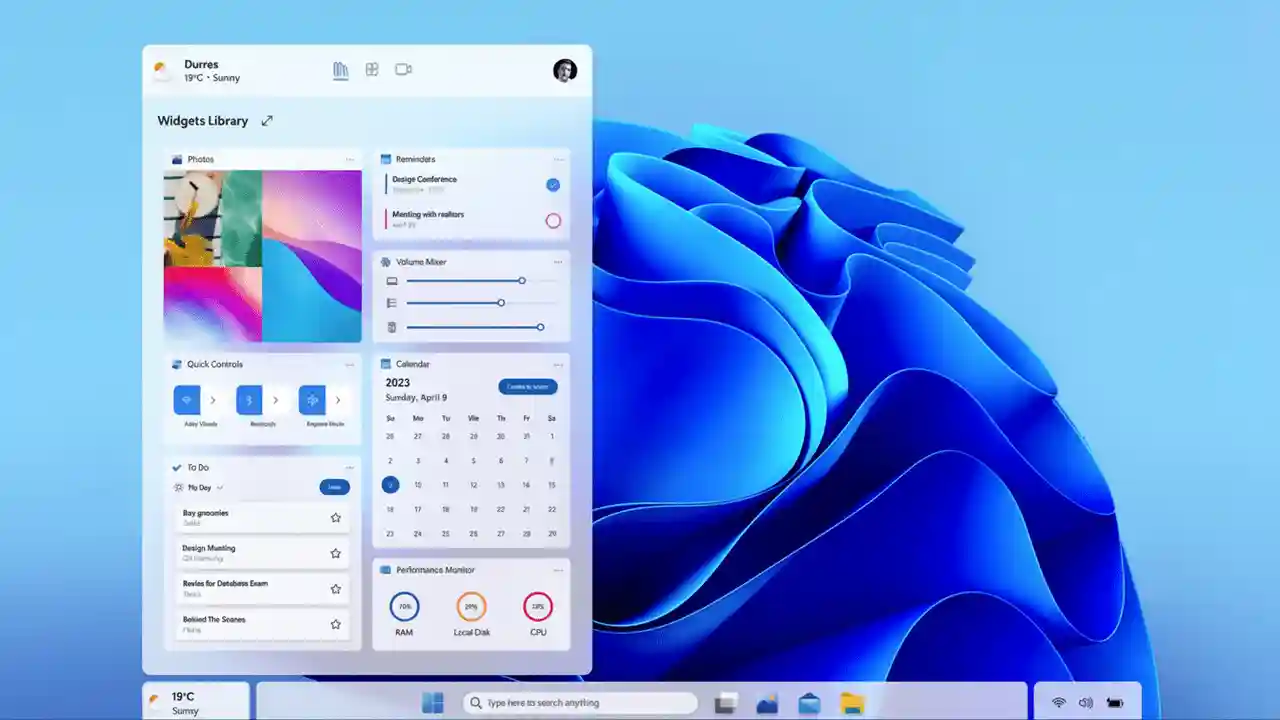
Windows 12 looks set to become an AI-first operating system, deeply integrating Microsoft’s Copilot to enhance user productivity and interaction. Unlike previous versions where Copilot functioned primarily as a sidebar chatbot, Windows 12 embeds it into the OS context itself, enabling real-time understanding and automation based on what’s displayed on the screen. Early insider builds showcase wake-word activation, window-scoped “vision” of UI elements, and proactive suggestions — for example, selecting a grid and instantly generating a ready-to-edit chart.
Microsoft emphasizes local AI processing through its Copilot+ PC initiative, aiming to run AI models on-device to reduce latency, maintain offline functionality, and bolster privacy. Semantic search, image recognition, and content summarization are prioritized capabilities, designed to work efficiently on modern hardware while respecting user data.
Windows 12 Hardware Baseline and Embrace of NPUs
A key theme is that Windows 12’s full experience will flourish on systems equipped with dedicated Neural Processing Units (NPUs). Leading chipmakers—Intel, AMD, Qualcomm—already offer laptop processors capable of delivering 40+ TOPS of AI compute power. Microsoft appears likely to optimize flagship features, like advanced Copilot interactions and semantic search, for these AI-powered machines.
Older hardware will continue running Windows 12, but some premium AI-driven functions may be unavailable, echoing the current Windows 11 model where NPU-equipped devices benefit from superior semantic search and context-aware actions. Qualcomm’s Snapdragon X Elite chip, for instance, outperforms Apple’s M3 in some benchmarks while pairing this raw power with a strong NPU pipeline.
Advances in Windows on Arm with Improved x86 Emulation
Windows on Arm is gaining momentum. Microsoft’s Prism emulator and platform refinements have notably improved x86 compatibility and performance on Arm laptops. Productivity suites, creative applications, and even development tools now run more smoothly on Arm devices.
Coupled with increasingly powerful Arm silicon from major vendors, Windows on Arm may become a hallmark feature of Windows 12. Gaming compatibility remains a challenge but industry investments, including Valve’s support for translation tools, promise a richer Arm gaming future, positioning Windows 12 strongly against Apple’s tight hardware-software integration.
Modular CorePC Architecture for Greater Security and Updates
Windows 12 aims to adopt a modular CorePC design, segmenting the OS into read-only components and isolating user data to facilitate secure, app-like updates. Inspired by concepts from Windows 10X and current improvements in Windows 11, this modularity enables tailored OS editions for various devices—stripping legacy components from lightweight models while preserving Win32 power on desktops.
This design reduces attack surfaces, enhances security postures, and provides faster, less disruptive updates resembling application refreshes rather than traditional system patches.
Windows 12 Subscription Rumors Clarified
Early code references to “subscription” sparked speculation, but context suggests these relate mainly to enterprise licensing and cloud-affiliated offerings like Windows 365 and Microsoft 365 plans. Trusted sources dismiss broad consumer subscription models for Windows 12, noting Microsoft’s revenues from services, store sales, and add-ons already support free OS upgrades for home users.
Incremental Rollout and Feature Evolution
Microsoft continues its trend of incremental, roughly annual Windows updates with frequent Insider previews. Windows 11’s integration of features like File Explorer tabs, new Paint and Photos apps, and Copilot-based tools illustrates this approach, likely to carry over and deepen in Windows 12 via tighter AI integration and modular OS design.
Anticipated Features and User Impacts
- OS-level Copilot operating across apps and system settings for comprehensive contextual assistance.
- Local AI enabled by default on NPU-equipped devices, delivering high-performance offline functionality.
- Expanded semantic search aware of user files, activities, and context for smarter navigation and productivity.
- Advanced voice commands and OS automation improving hands-free interaction.
- Modular system enabling faster boots and app-like updates reducing downtime and instability.
- Best-in-class x86 emulation tailored for the Arm ecosystem, expanding Windows reach.
With a large installed base still on Windows 10, Windows 12 faces high expectations. Combining device-level AI benefits with improved update experiences and trusted enterprise controls may finally drive broad adoption, transforming the way users engage with their PCs.